
Cryptocurrency & wallet fraud
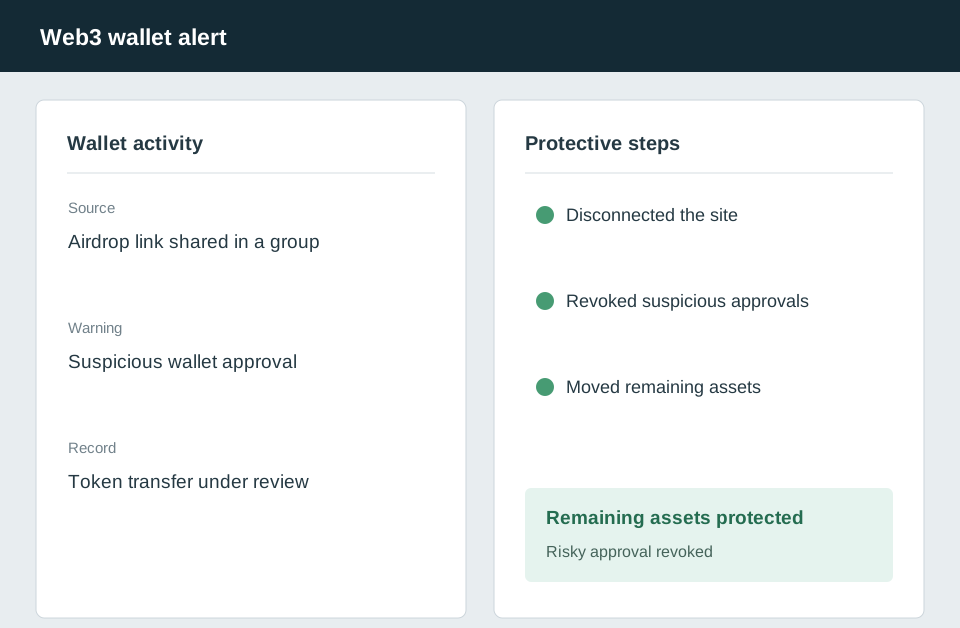
Wallet, token and NFT fraud: organize transfers, suspicious approvals and platform records.
We focus on cryptocurrency fraud, investment scams and online transaction disputes. We organize the facts, explain the process and help prepare records for stop-payment and freezing requests and recovery efforts. Recovery outcomes depend on the actual handling of each case.
A little structure can make a difficult situation clearer.
OUR SERVICES
From the first warning sign to a documented next step, explore the situations we focus on.
Wallet, token and NFT fraud: organize transfers, suspicious approvals and platform records.
Blocked withdrawals, sham trading platforms, false profits and demands for tax or unlocking payments.
Trust-based requests, false emergencies and people posing as companies, officials or customer support.
Pay-to-work offers, repeated top-up requests and task platforms that prevent withdrawals.
Goods not delivered, services not performed and disputed refunds or contract terms.
Impersonated supplier emails, changed payment instructions and misdirected business transfers.
Case studies
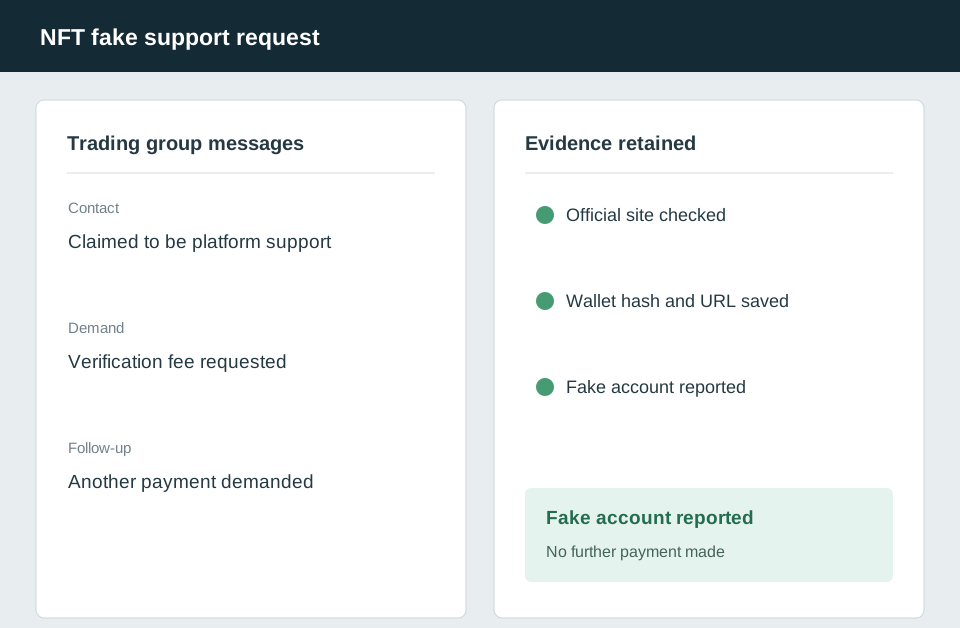
These fictional scenarios and sample records show how evidence and possible next steps can be organized.
Our approach
ChainShield Associates
Facts first. A clear process. Realistic expectations.
We focus on online fraud and transaction disputes. Our approach starts with understanding what happened, organizing the available records and explaining possible next steps in plain language.
Separate confirmed facts from assumptions. Pay attention to what was promised, what was paid and what changed.
Use a timeline and an evidence index to connect orders, conversations and payment records without altering originals.
Distinguish platform complaints, payment-provider processes and official reporting. Relevant rules depend on the location and the transaction.

Company member
Identify the transaction, the parties and the concern that needs attention.

Company member
Build a timeline and connect each important event to its supporting record.

Company member
Record submissions and replies, and reassess the next step as information changes.
A transparent sequence for understanding the issue and preparing the next step.
Identify the transaction, the parties and the concern that needs attention.
Build a timeline and connect each important event to its supporting record.
Check official procedures, required documents and any applicable deadlines.
Record submissions and replies, and reassess the next step as information changes.
Our principles are to explain the process clearly, protect sensitive information and avoid exaggerated promises. Passwords, private keys and recovery phrases are never evidence to share.
OUR FEE COMMITMENT
For all rights-protection services we undertake, service fees are charged only after recovered funds actually reach you.
Success means you have actually received the recovered money. A filed complaint or an accepted case does not trigger a service fee.
We do not collect a service fee in advance of the recovered funds reaching you.
There are no additional charges. The service fee rate and settlement terms are agreed in writing before work begins.
This is a fee policy, not a guarantee of recovery. The outcome depends on the evidence, available procedures and circumstances.
01 / START HERE
You do not need every answer before taking a useful first step.
Do not send more money to a suspicious recipient because they promise to release a refund or unlock a withdrawal.
Find your bank or payment provider through its official app, website or your existing account records. Ask what options are available.
If access may be compromised, follow the provider’s recovery process, change reused passwords and enable two-step verification.
02 / RECOGNIZE THE SITUATION
Choose a situation to see the warning signs and records that may help. This is a guide, not a finding about your case.
The order did not arrive, the service was not delivered or the product differs from the written description.
Order confirmation, delivery information, seller messages, the advertised description and the refund policy.
Write a clear account of the issue and requested resolution. Use the platform’s dispute process or ask the payment provider about available options.
03 / AN ACTION PLAN
A simple framework for separating urgent protection from longer-term follow-up.
Stop additional transfers to the suspicious party. Ask the payment provider whether a pending payment can be stopped, recalled or disputed. Availability depends on the payment and its status.
04 / YOUR EVIDENCE FILE
Use this checklist to organize what you already have. Keep originals intact and use copies when sharing through a verified official process.
05 / UNDERSTAND YOUR OPTIONS
Ask about the process that applies to your transaction. None of these routes guarantees a refund.
Tell the provider what happened and ask about the relevant fraud, recall or dispute process. Describe whether you authorized the payment. Check its requirements and deadlines.
Keep the order inside the platform’s official support process where possible. Explain what was promised, what happened and the resolution you are asking for. Save the replies.
Preserve the network, wallet addresses, transaction hash, date and amount. Notify the exchange or service you used. Transfers can be difficult to recover; a public transaction record is not a recovery guarantee.
06 / AVOID A SECOND LOSS
A professional-looking badge, a case number or knowledge of your loss is not proof of authority. Check independently before trusting a new approach.
An unexpected contact demands a tax, administration charge or unlocking payment before money can be returned.
Someone promises a certain result without reviewing the facts or explaining a legitimate process.
The supposed helper asks for a password, authentication code, recovery phrase or control of your device.
You are told to act immediately, stop speaking to others or move money to a supposedly safe account.
Questions
Common questions about records, reporting and realistic next steps.
No. Delays, quality issues and disagreements can arise without deception. Describe the facts clearly rather than assuming a label. The relevant platform, provider or authority can explain its process.
Start with what you have. Where possible, keep the original messages, full conversation, dates and associated transaction records. Screenshots are easier to understand when the surrounding context is preserved.
You can still organize records and ask what options remain. Time limits differ between providers, procedures and jurisdictions. Check with the institution responsible rather than assuming that it is too late.
Do not assume that it can. Tell the service you used what happened and keep the full transaction details. An investigation or a visible blockchain transaction does not guarantee that funds can be returned.
Treat a new payment demand from a suspicious party as a serious warning sign. Pause and verify independently before doing anything further, especially if the demand is linked to a promised refund.
Check their identity and credentials independently. Ask what service is being offered, what fees apply, which rules or deadlines matter and what the limitations are. A guaranteed result is not a sound basis for trust.
This page introduces our services and fee policy. It has no document-upload, account or payment form. Before engaging a service, verify the provider's identity, relevant credentials and written terms through an independently checked contact channel.
The relevant process can depend on your location, the seller or service, the contract and the payment method. Use official local information and seek qualified advice for an individual legal question.
Keep the records. Verify the route. Make an informed decision.